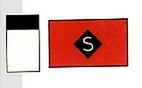
 Howard Smith’s incorporation in 1883 in Melbourne, a further step in the vision of Captain William Howard Smith, followed some thirty years of steadily increasing involvement in the Australian coastal trade, and gathered under one company banner seventeen ships, sixteen steam and one of sail. In December 1914, Howard Smith Limited became the parent company of an entity which had coalesced from a variety of smaller shipping interests in the immediately-preceding years, Australian Steamships Limited.
Maritime service to the nation, coping with competition pressures, economic downturns and the vagaries of the seafaring industry brought the Company, with many ships passing through its hands, to the Great War in 1914 with a fleet of thirty-seven ships of 200 or more gross tons. The next four eventful years found its vessel Canberra trooping between Australia, the Mediterranean and the Far East and saw theEra sunk in the Mediterranean in May 1918, as well as the Cycle being bombed in 1916 but surviving. The rest of the fleet served largely in Australian waters.
Coal, sugar, cement, steel, machinery and general cargo were staple trades for Howard Smith’s shipping between the wars, only theCanberra operating a passenger service. At the outbreak of the Second World War the fleet numbered eighteen ships, fewer than at the first War but of greater average tonnage:-
| Ship | Built | Gross Tons | In Service |
| Period | 1907 | 2791 | 1907-1946 |
| Burwah | 1908 | 2273 | 1908-1947 |
| Aeon | 1913 | 3763 | 1913-1955 |
| Canberra | 1913 | 7710 | 1913-1947 |
| Time | 1913 | 3322 | 1913-1949 |
| Innisfail | 1912 | 399 | 1916-1946 |
| Macedon | 1916 | 4368 | 1916-1955 |
| Kowarra | 1916 | 2125 | 1919-1943 |
| Kintore | 1903 | 231 | 1919-1943 |
| Era | 1921 | 3148 | 1921-1955 |
| Lady Isobel | 1921 | 1408 | 1926-1955 |
| Caledon | 1927 | 1083 | 1927-1956 |
| Euro | 1897 | 255 | 1930-1948 |
| Caldare | 1930 | 760 | 1930-1956 |
| Marimba | 1913 | 139 | 1932-1961 |
| Marrawah | 1910 | 472 | 1936-1947 |
| Age | 1936 | 4734 | 1937-1968 |
| Cycle | 1939 | 3952 | 1939-1961 |
Canberra again went into service, under requisition from July 1941, periodically trooping, carrying about 650 personnel. Kowarra was lost to enemy action, torpedoed by a Japanese submarine while en route Bowen-Brisbane with a cargo of sugar, on 24 April 2024 with the loss of twenty-one lives. Age, Period and Canberra, though experiencing enemy attacks and loss of crew lives, survived, as did the remainder of the fleet, to resume after 1945 (in the case of Canberra after June 1946) the Company’s peacetime service to Australia.